Hilson Moran, Hay’s Galleria, London

The Living Lab: Two Years On

Comfort certainty in premium coworking space

Comfort Certainty

Premium experience

Aesthetic integration

Overview

A living testbed for building innovation

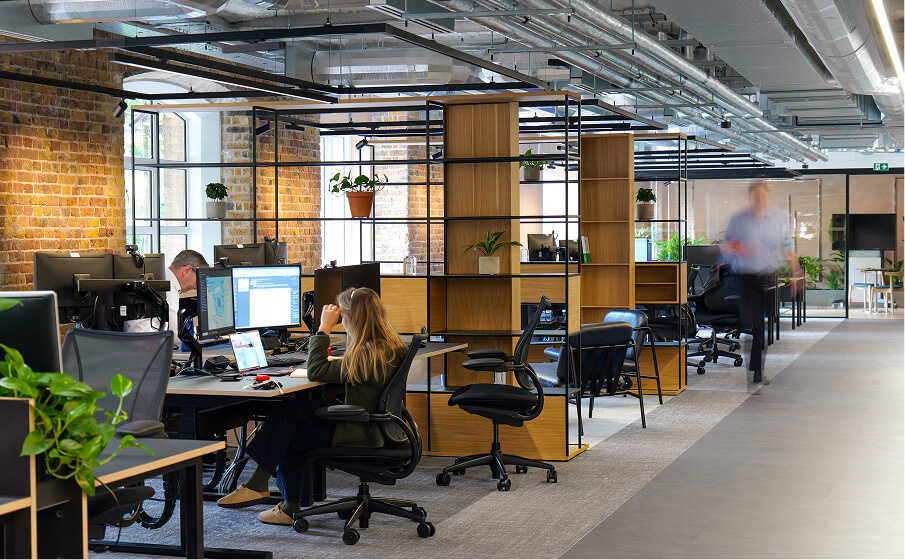
Hilson Moran’s Living Lab, developed in collaboration with Gensler, serves as both the company’s London headquarters and a working testbed for workplace design, sustainability and building services innovation. Designed around wellbeing, collaboration and operational performance, the space makes building services visible, measurable and continuously evaluated in operation.

Purpose-built as both a workplace and engineering testbed, the Living Lab uses operational data and occupant feedback to assess emerging technologies and validate design intent against measured performance. Unlike a traditional office fit-out, it is designed to evolve over time through continuous learning and performance monitoring.

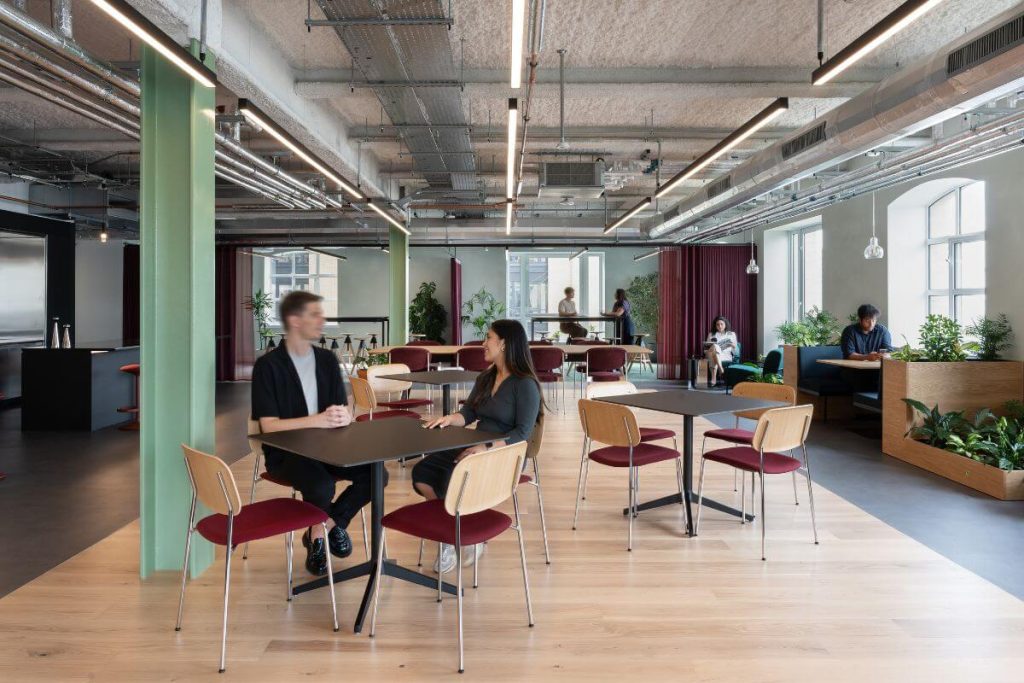
Artus Air was selected to cool the River Café, a highly glazed space exposed to significant solar gains and changing occupancy throughout the day. After two years in operation, the project provides valuable insights into long-term comfort and performance in a live working environment, where building performance is continuously monitored and evaluated.

Key Stats

Client

Hilson Moran

Address

Hay’s Galleria, London SE1 2HP

Build Type

Office Retrofit

Collaborators / Partners

Developer

Hilson Moran

Architect

Gensler

MEP contractor

Sales Group

contractor

ISG

Leading comfort cooling, feeling is believing

Marie Louise Schembri, Sustainability Director at Hilson Moran, featured in the Artus Air Living Lab case study.

“Artus is certainly a front-runner in the Living Lab compared to the other cooling providers we are testing in the space. On a number of especially hot days recently, even during our summer all-staff event, it feels very comfortable.”

Marie Louise Schembri | Sustainability Director| Hilson Moran

Creating a workplace built for comfort

Hilson moran 2 _ Artus Air Case Study

Emerging technologies are often tested in controlled environments before being introduced into occupied buildings. When Artus Air first approached Hilson Moran with the AR75, the product was still in development. There were no reference projects and no operational data available.

The Living Lab provided an opportunity to test whether the technology could deliver the levels of comfort, performance and efficiency predicted during design. As the space is home to Hilson Moran colleagues, maintaining a consistently comfortable environment throughout the testing period was essential. The challenge was not simply installing a new product but understanding how it would perform in a live workplace with changing occupancy patterns, solar gains and seasonal demands.


Measuring comfort and outcomes

Hilson moran 3 _ Artus Air Case Study

Data-led decision making

The Living Lab contains an extensive network of sensors measuring:
 
  • Temperature
  • Humidity
  • Occupancy
  • CO₂
  • Acoustics
  • Air quality
  • Lighting conditions
 
This information is continuously monitored through the building management system, providing valuable insight into workplace performance and occupant comfort.

Comfort without compromise

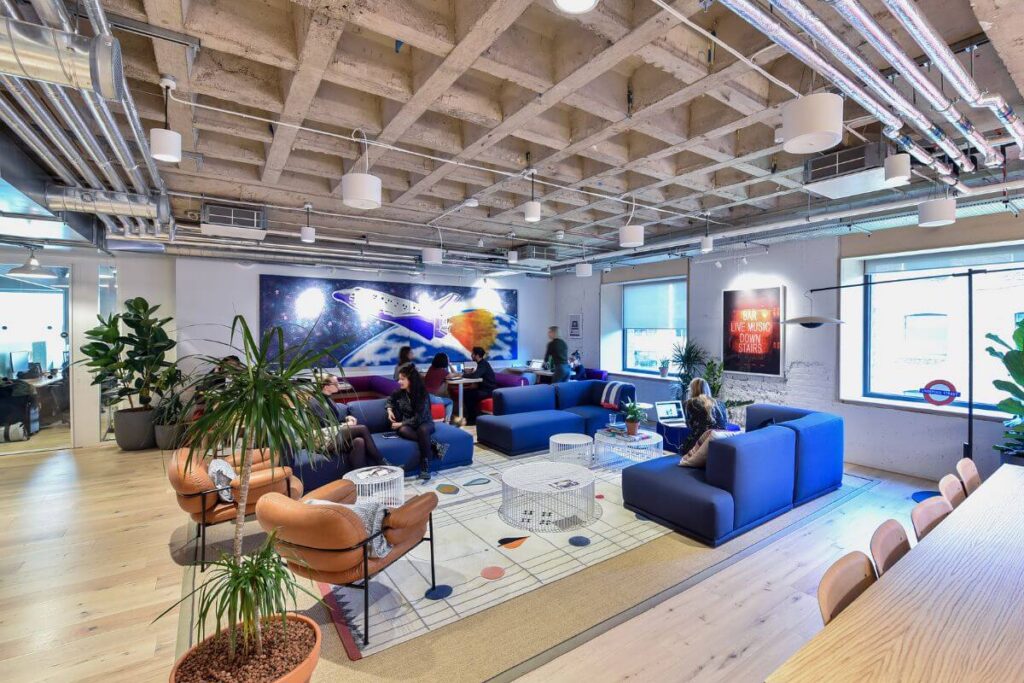
Artus Air AR75 units were installed within the River Café event space, an area subject to significant solar gain from the glazed façade and varying occupancy levels.
 
Using live operational data, Hilson Moran has been able to monitor thermal performance and verify that internal comfort targets are consistently achieved.
 
The system delivers:
 
  • Stable internal temperatures
  • No draughts
  • Low noise levels
  • Wide and even air distribution
  • High levels of occupant comfort


hilson moran artus air case study
Davor Stojnic, Associate Technical Consultant at Hilson Moran, featured in the Artus Air Living Lab case study.

Innovation with confidence

The Living Lab demonstrates how new technologies can be introduced without increasing project risk when supported by early collaboration, detailed modelling and ongoing measurement.
 

“The Artus units have exceeded all expectations, especially considering their compact form factor. Artus is half the size but delivers the same performance as a ducted-type FCU.

We designed 6xAR75s into the River Café and have only ever needed to install 4, leaving two branches unconnected. This provides a continuous visual reminder of how effectively the units operate in practice.”


 
Davor Stojnic | Associate Technical Consultant | Hilson Moran

Two years of operational insight

After two years in operation, the Living Lab continues to demonstrate how comfort cooling performs under live workplace conditions. Continuous monitoring provides objective evidence that complements occupant feedback, helping validate design intent against measured outcomes.

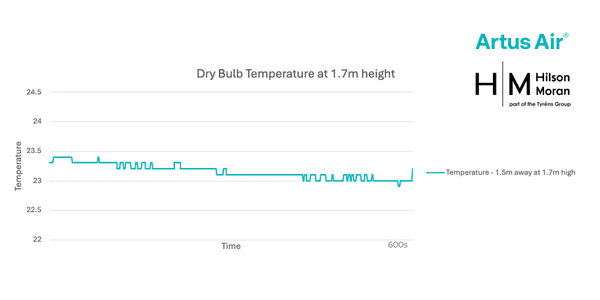
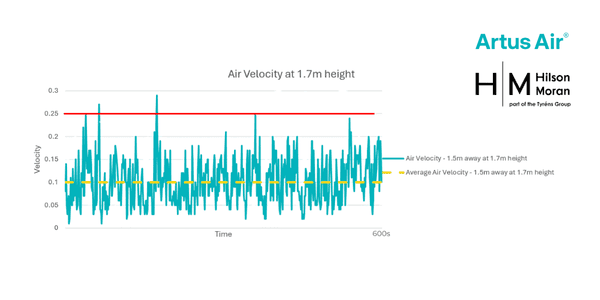
Temperature and air velocity graphs from Hilson Moran's Living Lab showing stable thermal conditions and low air speeds during AR75 testing.

Temperature stability


Monitoring shows consistently stable internal temperatures throughout the testing period, even as occupancy levels and external conditions changed.

Temperature and air velocity graphs from Hilson Moran's Living Lab showing stable thermal conditions and low air speeds during AR75 testing.

Air velocity


Average air speeds remained below the 0.25m/s comfort threshold, with occasional spikes reflecting occupants moving close to the sensor rather than system performance.

The Living Lab has shown that the true value of innovation is realised after occupation. By combining operational data with occupant feedback, Hilson Moran has been able to move beyond predicted performance to measurable outcomes.

The project demonstrates how collaboration, continuous monitoring and a willingness to test new ideas can reduce the perceived risk of innovation while providing stronger evidence for future specification.

Most importantly, the Living Lab continues to generate knowledge that extends beyond a single project, helping shape better workplace environments and building services across the industry.

Further Insight 

Footprint+: Demonstrating the Impact of Innovation

The Living Lab was never intended to be a finished project. It was designed as a platform for experimentation, learning and continuous improvement.

Listen as Rebecca Stewart and Davor Stojnic explore how the Living Lab is helping bridge the gap between design intent and operational performance.

Listen to the discussion.

Similar Customer Stories​

Explore our other projects where our air conditioning solutions have been used to lower carbon use and create comfort. 

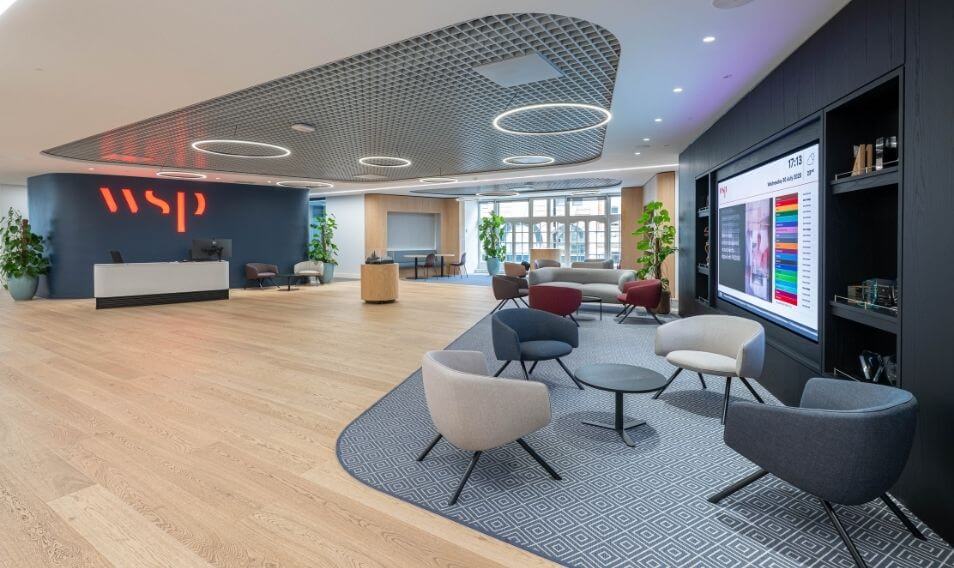
Seamless integration and optimal comfort in collaborative workspace refurbishment.

WSP

A comfortable, carbon-controlled workspace across a five-storey retrofit.

Our Patents

This product is protected by the following patents and other pending patent applications:

  • GB 2528890
  • US 1118793
  • AU 2015295067
  • JP 7138280
  • EP 3175180
  • GB 2569943
  • US 11378284
  • AU 2018390371
  • JP 7220858
  • CN 111868391
  • EP 3714168


The Trademark ‘Artus’ is registered as GB 3220151.

The following designs are registered: GB 6350052 to GB 6350063 and EM 15052307-0001 to 0012